Apr 08, 2026
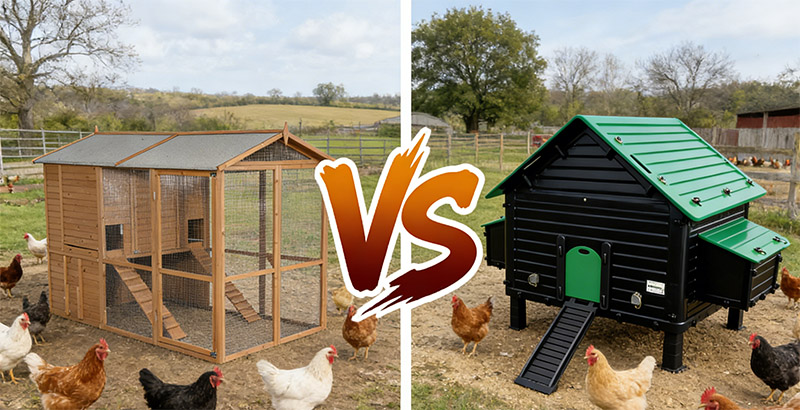
Le choix inégalé : pourquoi les poulaillers en bois restent la référence absolue pour les éleveurs de volailles exigeantsDans le monde en constante évolution de l'élevage de volailles de basse-cour, les tendances vont et viennent. Des données de marché récentes, datant de 2024, confirment une évolution : les poulaillers en plastique, autrefois un produit de niche, représentent désormais environ 33,4 % du marché, séduisant principalement les citadins amateurs et les nouveaux propriétaires en quête de praticité. Cependant, ces mêmes données révèlent une vérité marquante : 62 % des éleveurs de volailles – soit la grande majorité – font toujours confiance aux poulaillers en plastique et les préfèrent. poulaillers en bois.En tant que fabricant spécialisé de poulaillers en bois haut de gamme, nous savons que ce choix ne relève pas uniquement de la tradition. Il s'appuie sur une connaissance approfondie de l'élevage, du respect de l'environnement et de la valeur à long terme. Si les poulaillers en plastique offrent une solution rapide, le bois propose un habitat harmonieux et durable. Découvrons ensemble les raisons profondes et pratiques pour lesquelles les poulaillers en bois demeurent essentiels à la santé et à la prospérité des élevages en Europe et en Amérique du Nord.1. La science de l'abri : dynamique thermique supérieure et santé respiratoire La santé de votre volaille dépend avant tout de l'air qu'elle respire et de la température qu'elle supporte. C'est là que les propriétés fondamentales du bois la distinguent du plastique.Thermorégulation naturelle : Le bois est un matériau naturellement poreux, composé de millions de minuscules alvéoles. Cette structure cellulaire lui confère des propriétés d'isolation exceptionnelles. Au cœur de l'hiver, un poulailler en bois bien construit agit comme une batterie thermique, emprisonnant la chaleur corporelle collective des poules et maintenant ainsi une température intérieure nettement supérieure à celle d'une structure en plastique. À l'inverse, lors d'une canicule estivale, la faible conductivité thermique du bois lui permet de rester frais au toucher, de résister à la chaleur rayonnante du soleil et d'offrir un refuge ombragé et tempéré. Le plastique, quant à lui, est sensible aux variations de température extrêmes : il se transforme en fournaise en plein soleil et en congélateur lorsque la température chute.Respirabilité et contrôle de l'humidité : La gestion de l'humidité est peut-être encore plus cruciale que la température. La principale menace pour la santé respiratoire des volailles est l'ammoniac, qui s'accumule à partir des déjections mélangées à l'humidité. La respirabilité naturelle du bois permet à la vapeur d'eau de le traverser, empêchant ainsi la condensation sur les murs et les plafonds. Cette action de capillarité contribue à maintenir l'intérieur du poulailler sec et réduit considérablement le risque de maladies respiratoires comme l'aspergillose. Le plastique, étant non poreux, emprisonne souvent l'humidité à l'intérieur. Cela entraîne de la condensation (des « murs qui transpirent »), créant un environnement humide et riche en ammoniac, propice au développement de maladies.2. Ingénierie pour la durée de vie : durabilité et intégrité structurelleUn poulailler est un investissement pour l'avenir de vos poules. En choisissant un poulailler en bois d'un fabricant de qualité, vous optez pour une structure conçue pour résister aux intempéries pendant des décennies.Résistance aux intempéries : Si tous les matériaux subissent l’usure du temps, le bois de haute qualité, correctement traité et mis en œuvre, offre une résistance remarquable. Les traitements modernes du bois et les peintures extérieures créent une barrière efficace contre la pluie, la neige et les rayons UV. Contrairement au plastique, qui peut devenir cassant et se fissurer avec le temps sous l’effet du soleil, ou se déformer en cas de fortes variations de température, le bois de qualité conserve son intégrité structurelle. Un poulailler en bois Avec un débord de toit bien conçu et une base traitée, l'eau s'écoulera efficacement pendant des années.Résistance aux prédateurs : Un poulailler doit être une forteresse. Les panneaux en plastique, même ceux présentés comme « durables », peuvent parfois être rongés par des prédateurs déterminés tels que les ratons laveurs ou les rats, ou se fissurer sous l’impact. Un poulailler en bois bien construit, avec du bois massif et des assemblages solides, constitue une barrière physique beaucoup plus difficile à franchir pour les prédateurs. La robustesse naturelle du bois offre aux éleveurs la tranquillité d’esprit quant à la sécurité de leurs volailles la nuit.3. Le plaisir d'un espace de vie : personnalisation et évolutionChaque élevage et chaque jardin est unique. Un poulailler doit pouvoir s'adapter à vos besoins spécifiques, et le bois est le matériau idéal pour une personnalisation optimale.Adaptabilité à l'évolution de votre élevage : Votre aventure avicole est faite pour évoluer. Vous pourriez ajouter de nouvelles races, agrandir votre troupeau ou vous lancer dans l'élevage. Un poulailler en bois peut évoluer avec vous. Besoin d'installer une porte à ouverture plus large pour votre race lourde ? Envie d'ajouter un perchoir sur mesure ? Besoin de séparer un espace pour une poule couveuse et ses poussins ? Avec des outils simples, vous pouvez percer, scier et modifier un poulailler en bois en toute simplicité. Cette flexibilité est tout simplement impossible avec la construction monobloc moulée par injection de la plupart des poulaillers en plastique.Harmonie esthétique et expression personnelle : votre jardin est le prolongement de votre maison. Un poulailler en plastique, d'apparence utilitaire, peut détonner dans un jardin soigneusement aménagé. Les poulaillers en bois offrent un charme intemporel. On peut les peindre pour les assortir à sa maison, les teindre pour qu'ils se fondent dans le paysage naturel, ou les laisser se patiner naturellement pour acquérir une belle teinte argentée. Cette capacité à s'harmoniser avec l'architecture de votre propriété est l'une des principales raisons pour lesquelles les éleveurs choisissent le bois : il sublime leur espace extérieur au lieu de le dénaturer. Réparabilité : Le temps et les intempéries peuvent faire des ravages, mais les dommages causés à un poulailler en bois Il est presque toujours réparable. Une lame de parquet pourrie ? Remplacez-la. Une charnière desserrée ? Revissez-la dans du bois solide. Une peinture défraîchie ? Poncez et repeignez. Cette philosophie du « réparer avec les moyens du bord » est essentielle à un mode de vie durable et représente un avantage considérable par rapport au plastique, où une fissure ou un panneau cassé signifie souvent que l’ensemble du meuble est irréparable et bon pour la décharge.4. Un regard honnête sur l'entretien et la résistance aux parasitesL'un des principaux arguments marketing des poulaillers en plastique est la promesse d'une vie « sans acariens rouges » et « sans entretien ». En tant que fabricants expérimentés, nous tenons à présenter un point de vue honnête et objectif.Concernant les acariens rouges : il est vrai que ces acariens peuvent se cacher dans les fissures et crevasses du bois. Cependant, ce n’est pas une fatalité ; il s’agit d’un point à prendre en compte lors de la conception et de l’entretien. Un poulailler en bois bien conçu, provenant d’un fabricant réputé, présente les caractéristiques suivantes :Construction sans joint apparent : des joints minimaux et des planches soigneusement ajustées réduisent les risques de dissimulation.Surfaces lisses et peintes : Une peinture multicouche de haute qualité imperméabilise le bois, créant une surface aussi hostile aux acariens que le plastique. Les acariens ne peuvent pas s’infiltrer dans le bois peint et imperméabilisé.Intérieurs faciles à nettoyer : Les poulaillers modernes en bois sont conçus pour faciliter le nettoyage, avec des surfaces intérieures lisses et parfois même des planchers et des panneaux amovibles pour un accès facile.Gestion proactive : Un simple nettoyage annuel, suivi d’un saupoudrage de terre de diatomées de qualité alimentaire (une poudre naturelle) dans les joints et les crevasses, élimine tout risque d’acariens. Ce petit effort représente une fraction du travail nécessaire à l’entretien d’un jardin sain. Le mythe du « sans entretien » : Rien n'est véritablement sans entretien. Si le plastique ne nécessite aucune peinture, il requiert un nettoyage soigneux avec des produits spécifiques pour éviter tout dommage. Il peut également abriter des bactéries dans les micro-rayures qui apparaissent avec le temps. L'« entretien » d'un poulailler en bois – un après-midi agréable consacré à l'application d'une nouvelle couche de teinture naturelle ou de peinture une fois par an – est souvent perçu par les éleveurs non comme une corvée, mais comme un acte de soin qui protège leur investissement et préserve la beauté de leur poulailler.5. L’impératif éthique et environnementalPour un nombre croissant d'éleveurs, le choix du poulailler est avant tout un choix environnemental.Une ressource durable et renouvelable : le bois, issu de forêts gérées durablement, est le matériau de construction renouvelable par excellence. Sa production a une empreinte carbone nettement inférieure à celle des plastiques dérivés du pétrole. En choisissant le bois, vous contribuez à un avenir durable. poulailler en boisEn choisissant ce produit, vous soutenez la gestion durable des forêts et vous optez pour un produit qui stocke le carbone au lieu d'en émettre lors de sa fabrication.Biodégradabilité et fin de vie : Un poulailler en bois de haute qualité peut durer 15 à 20 ans, voire plus, avec un entretien adéquat. En fin de vie, il se biodégradera naturellement et retournera à la terre. Les poulaillers en plastique, quant à eux, sont destinés aux décharges où ils persisteront pendant des centaines d’années, se décomposant en microplastiques nocifs. Pour l’éleveur de volailles soucieux de l’environnement, le choix est évident.Conclusion : Un héritage de santé, de beauté et de valeurÉlever des volailles, c'est renouer avec un mode de vie plus simple et plus authentique. Votre poulailler devrait refléter cette philosophie. Si le plastique offre un confort aseptisé et éphémère, le bois offre un habitat vivant et chaleureux à vos poules.En choisissant un poulailler en bois de notre usine, vous n'achetez pas seulement un abri ; vous investissez dans :La santé et le confort à long terme de vos oiseaux.La beauté et l'harmonie de votre jardin.Une structure durable et réparable qui durera des générations.Un choix respectueux de l'environnement dont vous pouvez être fier.Pour les 62 % qui ont opté pour le bois – et pour les 33,4 % qui envisagent d'acquérir leur prochain poulailler – le message est clair : le bois n'est pas seulement un choix traditionnel ; c'est le choix le plus judicieux, le plus durable et, au final, le plus gratifiant pour un troupeau heureux et en bonne santé. Faites confiance à ce matériau qui a servi les agriculteurs et les familles pendant des siècles. Choisissez un poulailler en bois.
EN SAVOIR PLUS



 Réseau IPv6 pris en charge