Jul 10, 2026
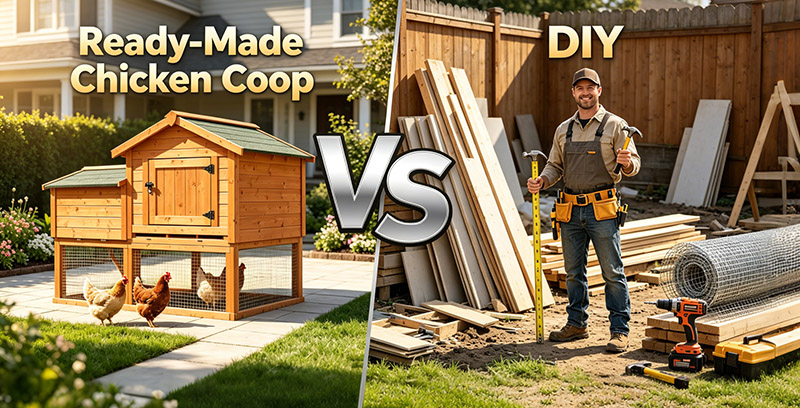
Why Choose a Ready-Made Chicken Coop Instead of DIY?
Raising backyard chickens has become a global trend, and building a DIY coop is often one of the first projects that comes to mind for new poultry keepers. In fact, chicken coops are among the most popular DIY searches online. Yet the market tells a different story: the global chicken coop market was valued at between $397 million and $562 million in 2025, and is projected to reach $753 million to $907 million by 2035. Wooden coops alone are expected to account for 35.6% of the global market in 2026. These figures primarily reflect commercial sales—that is, ready‑made purchases—which shows that despite the DIY buzz, the vast majority of consumers still choose to buy, not build.
So why do so many people start with DIY intentions but ultimately end up buying?
The DIY Appeal – Why It Tempts
There’s no denying the attractions of building your own:
Cost savings on paper – Many sources claim that building a coop yourself can be 40% to 70% cheaper than buying a comparable ready‑made one.
Full customisation – You can tailor the size, shape, and features to your exact flock size, yard layout, climate, and local predators.
Personal satisfaction – For many, it’s a creative project that showcases craftsmanship and brings a sense of pride.
Some also turn to DIY because they worry that mass‑produced coops use thin boards and flimsy wire mesh that predators can easily breach, and that they may only last 1–2 years outdoors. The dream is a fortress‑style coop built to last.
The Reality – Why DIY Often Falls Short
In practice, however, many first‑timers abandon their DIY plans halfway and end up buying. Here’s why:
1. The Hidden Cost Trap
Raw materials are far more expensive at retail than most people anticipate. Lumber, quality hardware cloth, galvanised screws, roofing shingles, and exterior paint add up quickly. If you lack basic woodworking tools—drills, circular saws, levels, clamps—the cost of buying or renting them can blow your budget entirely. Studies show that 50% of DIY coop builders exceed their initial budget by over 70%. One common example: building a medium coop for 4–6 chickens can easily cost over $1,000 in materials, while a comparable ready‑made coop from a reputable retailer costs just $400–$500. Factories benefit from economies of scale that no individual workshop can match.
2. Time and Energy Sink
A proper coop is not a weekend afternoon project—it typically consumes three full weekends or more. For those without carpentry experience, tasks like measuring precisely, cutting square, assembling level frames, and ensuring right angles are frustratingly difficult. Many get as far as the base or frame, then lose steam when faced with intricate details—fitting doors and windows perfectly, installing predator‑proof latches, or roofing. The joy of a creative project quickly turns into exhaustion and disappointment when it fails to come together. Sometimes, the wiser choice is to achieve your goal through a simpler, more reliable path.
3. Design Pitfalls That Haunt You Later
Inexperienced builders often overlook critical design elements, leading to daily maintenance nightmares:
Hard to clean – Forgetting large side‑access doors or droppings trays makes every cleaning session a back‑breaking ordeal.
Ventilation vs. draughts – Blocking high vents causes ammonia buildup, dampness, and mould; while poorly placed openings let cold winds chill roosting birds, inviting illness.
Building a chicken coop is a systematic project. It requires deep knowledge of chicken behaviour, health needs, structural engineering, and ongoing maintenance. Any seemingly simple detail can have major consequences if missed. Commercial manufacturers, having produced tens of thousands of coops, have refined every aspect through real‑world feedback and rigorous testing—expertise that is nearly impossible for a first‑timer to replicate.
Why More and More People Choose Ready‑Made Coops
On the flip side, buyers of ready‑made coops enjoy clear advantages:
1. What You See Is What You Get
With a purchased coop, you browse photos, read specs, and check real customer reviews before you buy. You know exactly what you’re getting—size, material, assembly method, and suitability for your planned flock. DIY projects often end up looking or functioning quite differently from the original vision, leading to rework or even abandonment.
2. Speed to Enjoyment
Order today, receive it in as little as three days. Unboxing and assembly typically take only 3–4 hours—sometimes as little as 30 minutes for simpler models—versus three weekends of building. That saved time can be spent with family, gardening, or simply relaxing. And if you start with adult hens, while the DIY builder is still hammering away, your hens will already be laying fresh eggs by week three. In our fast‑paced lives, saving unnecessary time and enjoying results sooner is a form of smart living.
3. Compact, Lightweight, and Mobile
Urban/suburban friendly – Ready‑made coops are designed with modern small yards in mind—compact, aesthetically pleasing, and HOA‑compliant.
Portable options – Many come with lightweight materials or built‑in wheels, so you can easily move them around the lawn. This gives your flock fresh grass and bugs while preventing bare patches. DIY wooden coops, by contrast, are often too heavy to move once assembled.
4. Neighbour‑Friendly and Regulation‑Ready
In many North American communities, strict HOA rules or city ordinances govern backyard coops. A DIY structure that looks improvised can attract complaints and fines. Professionally designed coops feature cohesive colours, clean lines, and a polished appearance that blends well into any neighbourhood—making it easier to gain approval and maintain good relations.
5. Seeing Through the Cost Mirage
Experienced buyers recognise that the perceived savings of DIY are often an illusion. When you factor in materials, tools, wasted supplies from mistakes, and the value of your own time, buying a well‑made coop is frequently the more economical choice in the long run.
A Balanced View – DIY Isn’t for Everyone
We absolutely admire those who have the skills, tools, and patience to build a beautiful, durable coop from scratch—that is truly commendable. However, we also believe in being honest: DIY is best suited to experienced woodworkers with ample time and a well‑equipped workshop. If you value your time, want predictable costs, need a reliable product quickly, and prefer a design that’s both functional and attractive, then buying a ready‑made coop is very likely the better decision—and one you won’t regret.
Making the Right Purchase – Choose a Trusted Partner
That said, buying a coop doesn’t mean settling for poor quality. The key is finding a manufacturer you can trust. That’s where Shaw Ye comes in.
With over 20 years of specialised experience in chicken coop manufacturing, Shaw Ye is an FSC‑certified supplier and a trusted OEM partner for leading pet brands worldwide. We offer a wide range of models and sizes to suit every flock and every yard. Our coops combine durability, thoughtful design, and competitive pricing—delivering exceptional value. And if you have unique requirements, we also provide customisation services to bring your ideal coop to life.
Choose Shaw Ye – because your chickens deserve a safe, comfortable home, and you deserve peace of mind.
EN SAVOIR PLUS



 Réseau IPv6 pris en charge